
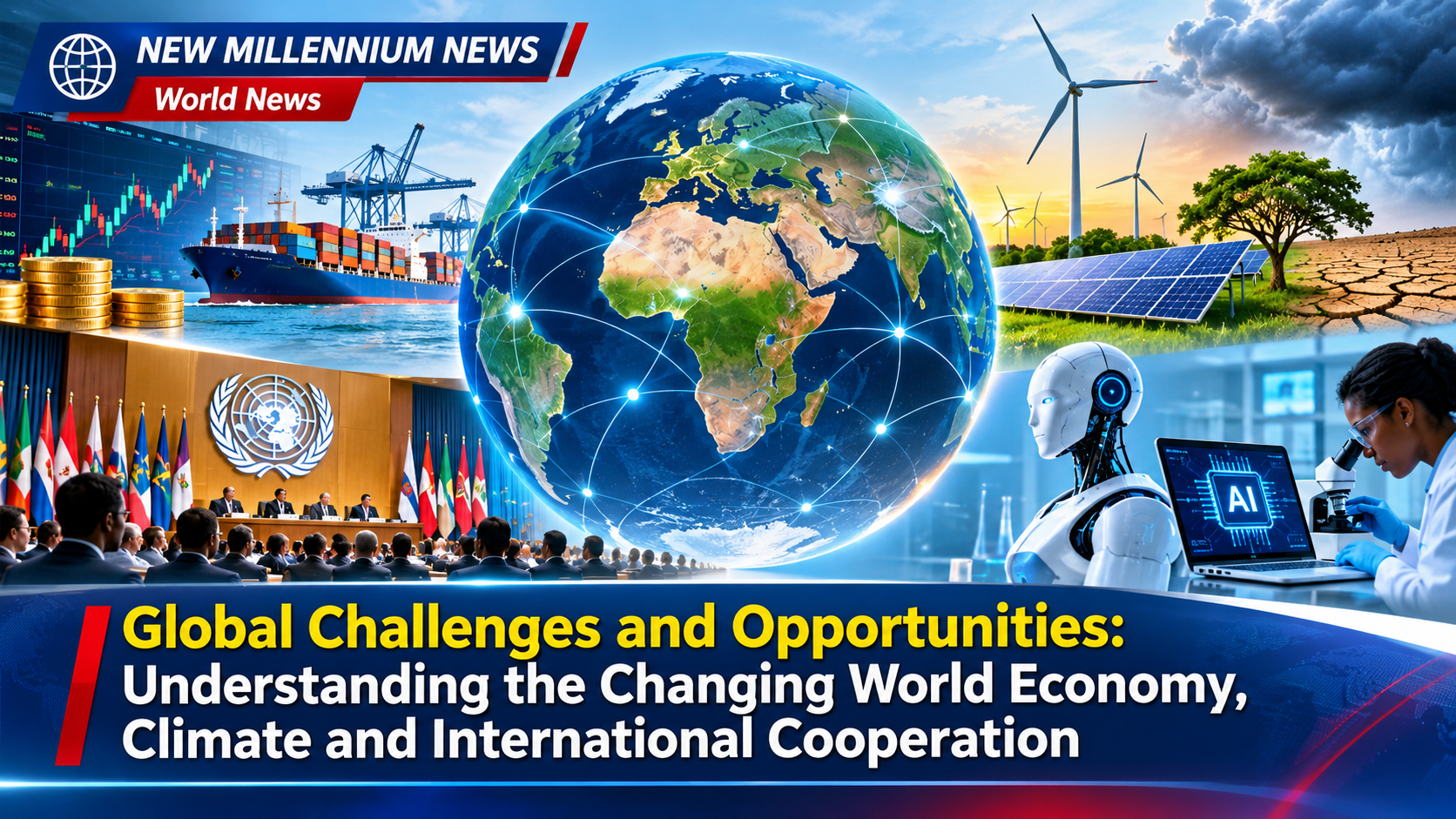
The world is experiencing significant economic, environmental, political and technological changes that continue to influence the lives of people across nations. From shifting global trade patterns and climate-related challenges to technological innovation and international security concerns, countries face complex issues that require thoughtful policies and cooperation.
Economic uncertainty, geopolitical tensions, environmental pressures and unequal access to development opportunities remain important concerns for governments, businesses and communities. At the same time, advances in technology, renewable energy, scientific research and international partnerships offer opportunities to improve living standards and promote sustainable growth.
For developing countries, including Nigeria, global developments can have far-reaching implications for trade, investment, energy prices, food security, employment and economic stability. Understanding these international trends is therefore important for evaluating their potential effects on national development and everyday life.
As nations respond to emerging challenges, effective diplomacy, responsible leadership, innovation and cooperation will remain essential to addressing shared problems and creating opportunities for future generations.
This article examines major global challenges and opportunities, focusing on the world economy, climate change, international relations, technological development and the importance of cooperation in building a more stable and sustainable future.
The Changing Global Economy and International Trade
The global economy connects countries through international trade, investment, financial markets, technology and the movement of goods and services. Developments in one part of the world can influence economic conditions elsewhere, affecting businesses, governments and households.
Changes in international trade policies, energy markets, inflation, interest rates and geopolitical relations can create both challenges and opportunities for national economies.
Understanding these developments is important for countries seeking to strengthen economic resilience, attract investment and improve living standards.
Global Trade and Economic Interdependence
International trade enables countries to exchange goods, services, technology and resources, supporting economic activities and creating opportunities for businesses.
Many countries depend on international markets for essential commodities, industrial equipment, agricultural products and manufactured goods.
However, trade restrictions, supply-chain disruptions, transportation costs and political tensions can affect the availability and prices of products.
Strengthening trade relationships, improving infrastructure and encouraging economic diversification can help countries manage these challenges.
Inflation, Interest Rates and Economic Stability
Inflation and changes in interest rates influence borrowing costs, investment decisions, consumer spending and business operations.
When prices rise rapidly, households may experience reduced purchasing power, while businesses can face higher production and operating costs.
Central banks and governments use monetary, fiscal and other economic policies to address inflation, support financial stability and encourage sustainable growth.
The effectiveness of these measures depends on national economic conditions, institutional capacity and wider international developments.
Energy Markets and the Global Economy
Energy remains essential to transportation, manufacturing, electricity generation and international commerce.
Changes in crude oil and natural gas prices can affect production costs, government revenues and consumer prices in different countries.
At the same time, investment in renewable energy, energy efficiency and cleaner technologies is creating new opportunities for industries and investors.
Countries face the challenge of balancing energy security, affordability, economic development and environmental sustainability.
Technology and the Transformation of International Trade
Digital technologies are changing how businesses operate and participate in international markets.
E-commerce platforms, digital payment systems, automation and modern logistics technologies can help companies reach customers across borders.
These developments may create opportunities for small businesses and entrepreneurs, particularly where digital infrastructure and access to financial services are improving.
However, unequal access to technology, cybersecurity risks and differences in regulatory systems can limit participation in the digital economy.
Opportunities and Challenges for Developing Economies
Developing economies can benefit from international trade, foreign investment, technology transfer and access to wider markets.
Nevertheless, dependence on a limited range of exports, infrastructure gaps, debt pressures and exposure to external economic shocks can create vulnerabilities.
For Nigeria and other African countries, economic diversification, improved agricultural productivity, industrial development and stronger regional trade relationships can help expand opportunities.
Investment in education, infrastructure, technology and effective public institutions can also strengthen competitiveness.
Building a More Resilient Global Economy
A resilient global economy requires cooperation among governments, businesses, financial institutions and international organisations.
Policies that support responsible investment, fair competition, financial stability and sustainable development can help countries respond to economic uncertainty.
Strengthening supply chains, expanding opportunities for developing economies and encouraging innovation are important elements of long-term economic resilience.
Through balanced economic policies and constructive international cooperation, countries can work toward a more inclusive and sustainable global economy.
Climate Change, Environmental Challenges and Sustainable Development
Climate change and environmental degradation are among the major challenges affecting countries around the world. Rising global temperatures, changing rainfall patterns, extreme weather events and pressure on natural resources have important implications for agriculture, public health, infrastructure and economic development.
Although the effects vary across regions, climate-related risks can affect both developed and developing countries. Addressing these challenges requires scientific research, effective environmental policies, responsible investment and cooperation among nations.
Rising Temperatures and Extreme Weather
Global warming is contributing to changes in weather patterns and increasing the risks associated with certain extreme weather events.
Heatwaves, heavy rainfall, droughts and flooding can damage infrastructure, disrupt agricultural activities and threaten human health and livelihoods.
Coastal communities may also face risks from rising sea levels, erosion and flooding.
Strengthening early-warning systems, improving disaster preparedness and investing in climate-resilient infrastructure can help reduce the effects of these hazards.
Climate Change and Global Food Security
Agriculture depends on suitable weather conditions, water availability, healthy soils and functioning ecosystems.
Changes in rainfall, prolonged droughts, flooding and extreme temperatures can affect crop production, livestock farming and food distribution.
These challenges may place additional pressure on food supplies and household incomes, particularly in communities that depend heavily on agriculture.
Climate-smart farming practices, improved irrigation, agricultural research and sustainable land management can help strengthen food security.
Renewable Energy and the Global Energy Transition
Countries are exploring ways to reduce greenhouse gas emissions while meeting growing energy demands.
Renewable energy technologies, including solar, wind and hydropower, can contribute to cleaner electricity generation and greater energy diversification.
Improving energy efficiency, expanding electricity access and investing in modern energy infrastructure are also important elements of sustainable development.
However, the transition to cleaner energy systems requires substantial investment, appropriate technologies and policies that consider affordability, employment and national development needs.
Protecting Forests, Water Resources and Biodiversity
Forests, rivers, wetlands and other natural ecosystems provide essential environmental and economic benefits.
They support biodiversity, regulate water systems, protect soils and contribute to livelihoods.
Deforestation, pollution, unsustainable resource extraction and habitat destruction can weaken these natural systems.
Environmental protection measures, responsible land use, conservation programmes and community participation can help preserve natural resources for future generations.
Climate Finance and Developing Countries
Developing countries often face significant challenges in financing climate adaptation and environmental protection.
Limited financial resources, infrastructure gaps and competing development priorities can make it difficult to respond effectively to climate-related risks.
International climate finance, technology cooperation and capacity-building initiatives can support investments in renewable energy, resilient agriculture, flood protection and other adaptation measures.
Transparent financing arrangements and effective project implementation are important for ensuring that climate-related investments produce meaningful benefits.
The Importance of International Climate Cooperation
Climate change is a global challenge that cannot be addressed effectively by individual countries acting alone.
International agreements, scientific collaboration and cooperation among governments, businesses and civil society organisations can support collective efforts to reduce emissions and strengthen climate resilience.
The Paris Agreement provides an international framework through which participating countries pursue climate-related commitments and report on their progress.
Continued cooperation is important for advancing environmental protection while recognising differences in national circumstances and development priorities.
Building a Sustainable and Climate-Resilient Future
Sustainable development requires balancing economic progress, environmental protection and social wellbeing.
Governments can support this balance through responsible environmental regulation, investment in clean technologies, improved urban planning and protection of natural resources.
Businesses, research institutions and communities also have important roles in promoting innovation and sustainable practices.
By strengthening climate adaptation, encouraging responsible resource management and supporting international cooperation, countries can work toward a more resilient and environmentally sustainable future.
International Relations, Diplomacy and Global Security
International relations play an important role in shaping global peace, economic development, trade and cooperation among nations. As countries become increasingly connected through commerce, technology, migration and international institutions, developments in one region can have significant consequences for others.
Diplomacy, international law and cooperation remain essential tools for managing disagreements, preventing conflicts and addressing challenges that extend beyond national borders.
However, geopolitical competition, armed conflicts, territorial disputes and changing international alliances continue to create uncertainty in different parts of the world.
Diplomacy and Peaceful Conflict Resolution
Diplomacy enables governments to communicate, negotiate agreements and manage differences through peaceful means.
Bilateral discussions, regional organisations and international institutions provide opportunities for countries to address disputes and pursue shared interests.
Negotiation, mediation and other peaceful conflict-resolution mechanisms can help reduce tensions and prevent disagreements from escalating into violence.
Effective diplomacy also requires mutual respect, adherence to international obligations and a willingness to pursue constructive solutions.
Armed Conflicts and Humanitarian Challenges
Armed conflicts can cause loss of life, displacement, destruction of infrastructure and serious disruptions to economic and social activities.
Civilian populations often face difficulties accessing food, healthcare, education, shelter and other essential services during prolonged conflicts.
Humanitarian organisations and international institutions play important roles in providing assistance to affected communities.
Protecting civilians, respecting international humanitarian law and supporting humanitarian access are essential responsibilities during armed conflict.
Long-term recovery also requires rebuilding institutions, restoring livelihoods and creating conditions for lasting peace.
The Role of the United Nations and Regional Organisations
The United Nations provides a platform for international dialogue and cooperation on peace, security, development and human rights.
Its institutions and specialised agencies support activities involving humanitarian assistance, public health, education and sustainable development.
Regional organisations, including the African Union, European Union and Economic Community of West African States, also contribute to cooperation among their members.
The effectiveness of international institutions depends on political commitment, available resources and cooperation among participating countries.
Global Security and Emerging Threats
Modern security challenges extend beyond conventional military conflicts.
Cyberattacks, transnational organised crime, terrorism, misinformation and threats to critical infrastructure can affect national and international stability.
Addressing these challenges requires effective domestic institutions, responsible information sharing and cooperation among countries.
Security policies should also respect human rights, the rule of law and appropriate safeguards for individual freedoms.
International Trade, Sanctions and Geopolitical Competition
Political disagreements and geopolitical competition can influence international trade, investment and access to important resources.
Economic sanctions, export restrictions and changes in trade relationships may affect businesses, financial markets and ordinary consumers.
Countries must often balance national security interests with economic development and the benefits of international cooperation.
Transparent diplomatic engagement and predictable international arrangements can help reduce uncertainty and encourage stable economic relationships.
Africa’s Role in International Relations
African countries participate in international diplomacy through regional institutions, bilateral partnerships and multilateral organisations.
Issues such as trade, climate finance, security cooperation, debt sustainability and infrastructure development remain important elements of Africa’s international engagement.
Nigeria, as a member of the African Union, ECOWAS and the United Nations, participates in regional and global discussions affecting peace, economic development and international cooperation.
Strengthening African institutions and expanding opportunities for constructive diplomatic engagement can help countries pursue shared development priorities.
Strengthening Cooperation for Global Peace
Long-term international stability requires sustained diplomatic engagement, effective institutions and respect for international law.
Governments, international organisations and civil society groups can contribute to conflict prevention, humanitarian protection and peaceful cooperation.
Although countries have different political systems, economic interests and national priorities, constructive dialogue can help identify areas of common interest.
By strengthening diplomacy, supporting peaceful conflict resolution and encouraging responsible international cooperation, nations can work toward a more secure and stable global environment.
Technology, Innovation and the Future of Global Development
Technological innovation is transforming economies, industries and societies across the world. Advances in artificial intelligence, digital communications, healthcare, renewable energy and scientific research are creating new opportunities for economic growth and human development.
Technology is also changing how governments deliver public services, how businesses operate and how individuals access education, employment and information.
However, these developments raise important questions about digital inequality, cybersecurity, employment, privacy and the responsible use of emerging technologies.
Artificial Intelligence and Economic Transformation
Artificial intelligence is increasingly being applied in areas such as healthcare, education, agriculture, manufacturing, transportation and financial services.
AI-powered systems can assist with data analysis, automate certain tasks, support scientific research and improve the efficiency of business operations.
These technologies may create new industries and employment opportunities while also changing the skills required in existing occupations.
Governments, businesses and educational institutions must consider how to prepare workers for technological changes through training, digital education and lifelong learning.
Responsible AI development also requires attention to transparency, fairness, privacy, safety and accountability.
Digital Connectivity and the Global Economy
Internet connectivity and digital communication systems have become essential to modern economic and social activities.
Businesses increasingly depend on digital platforms for commerce, customer services, financial transactions and international collaboration.
Digital technologies also enable remote learning, professional communication and access to information across geographical boundaries.
Nevertheless, many communities continue to experience limited internet access, high connectivity costs and inadequate digital infrastructure.
Expanding affordable broadband services and improving digital literacy can help reduce these inequalities.
Scientific Research and Healthcare Innovation
Scientific and technological advances contribute to improvements in disease prevention, medical diagnosis, treatment and healthcare delivery.
Research in biotechnology, medical equipment, pharmaceuticals and digital health systems can support stronger public-health responses and improved patient care.
International scientific collaboration is particularly important when addressing infectious diseases, emerging health threats and other challenges that cross national borders.
However, unequal access to medical technologies and healthcare infrastructure remains a concern.
Policies that support research, healthcare investment and equitable access to essential innovations can help improve health outcomes.
Renewable Energy and Environmental Innovation
Technological innovation plays an important role in addressing energy challenges and environmental sustainability.
Advances in solar power, wind energy, battery storage and energy-efficient systems are creating opportunities for cleaner energy production and consumption.
Research into sustainable agriculture, water management and environmental monitoring can also support climate adaptation.
Developing countries may benefit from appropriate technology transfer, investment partnerships and local capacity-building initiatives.
Cybersecurity, Privacy and Digital Responsibility
As societies become more dependent on digital systems, cybersecurity and data protection have become increasingly important.
Cybercrime, online fraud, data breaches and attacks on critical infrastructure can threaten businesses, governments and individuals.
Strengthening cybersecurity requires effective laws, secure technologies, public awareness and cooperation among relevant institutions.
Protecting personal information and promoting responsible digital practices are also important for maintaining public trust.
Technology and Opportunities for Developing Countries
Emerging technologies offer developing countries opportunities to improve productivity, expand financial inclusion and strengthen public services.
For Nigeria and other African countries, digital innovation can support entrepreneurship, agricultural development, education, healthcare and access to wider markets.
However, realising these opportunities requires investment in electricity, telecommunications, education, research and digital infrastructure.
Supporting local innovators, technology startups and skills-development programmes can help strengthen participation in the global digital economy.
Building an Inclusive Technological Future
The benefits of technological progress should extend beyond major economic centres and highly developed countries.
Inclusive innovation requires policies that expand access to technology, promote digital skills and encourage responsible research and development.
Governments, businesses, universities and international organisations can work together to support technological cooperation and address emerging risks.
By investing in education, digital infrastructure, scientific research and responsible innovation, countries can use technology to support sustainable development and improve opportunities for future generations.
Conclusion: Building a More Cooperative and Sustainable World
The world continues to experience significant economic, environmental, political and technological changes that present both challenges and opportunities for nations and communities.
Global economic uncertainty, climate change, international security concerns and technological transformation demonstrate how closely connected countries have become. Decisions made in one part of the world can influence trade, investment, environmental conditions and living standards elsewhere.
Addressing these challenges requires responsible leadership, effective institutions, sound economic policies and sustained international cooperation.
Strengthening global trade relationships, encouraging responsible investment and supporting economic diversification can help countries build resilience against financial uncertainty and external shocks.
Similarly, responding to climate change requires greater investment in environmental protection, sustainable energy, climate adaptation and the responsible management of natural resources.
Diplomacy and peaceful conflict resolution remain essential for reducing international tensions, protecting vulnerable populations and creating conditions for stability and development.
Technological innovation also offers important opportunities to improve healthcare, education, agriculture, communication and economic productivity. However, ensuring that these benefits are widely shared requires attention to digital inclusion, cybersecurity, skills development and responsible technological governance.
For developing countries, including Nigeria, international developments highlight the importance of strengthening domestic institutions, expanding economic opportunities and participating constructively in global partnerships.
Ultimately, building a more peaceful, prosperous and sustainable world depends on cooperation among governments, international organisations, businesses, research institutions and communities.
By promoting dialogue, encouraging innovation, protecting the environment and pursuing inclusive economic development, nations can work together to address shared challenges and create better opportunities for future generations.
For NEW MILLENNIUM NEWS, continued coverage of international affairs remains important for helping readers understand global developments and their implications for Nigeria, Africa and the wider world.
Leave a Reply