
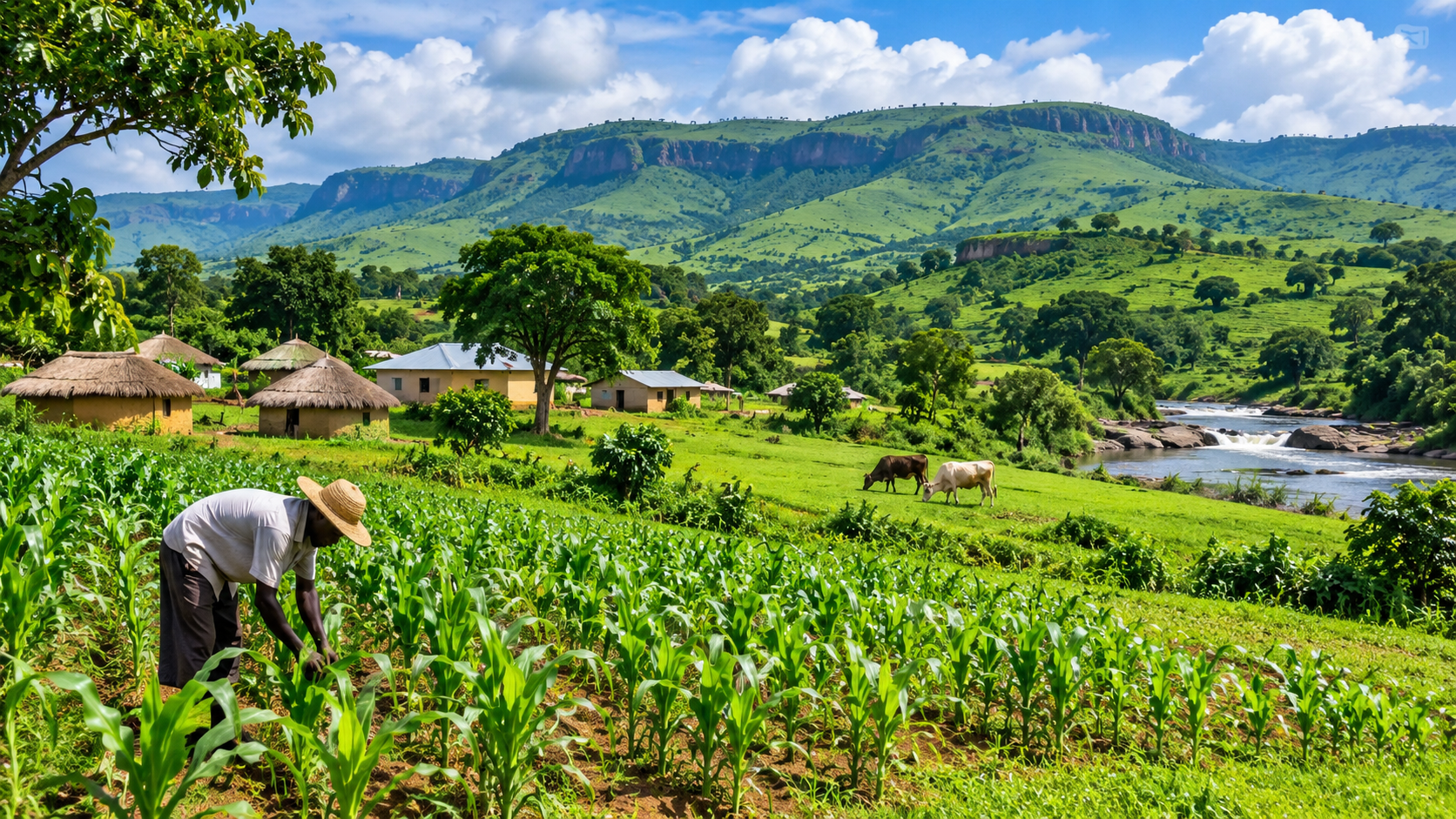
Taraba State, located in northeastern Nigeria, is widely recognised for its agricultural resources, diverse communities, natural landscapes and opportunities for economic development. With its fertile land, rivers, mountains and tourism attractions, the state has significant potential to strengthen agriculture, education, infrastructure and local enterprise.
As Nigeria continues to pursue economic diversification and sustainable development, Taraba State offers opportunities for investment, job creation and community advancement. However, realising this potential requires sustained attention to infrastructure, education, security, access to markets and the needs of rural communities.
Agriculture and Rural Development in Taraba State
Agriculture remains an important source of livelihood for many communities across Taraba State. The state’s varied landscapes and climatic conditions support the cultivation of crops such as maize, rice, cassava, yam and other agricultural produce.
Livestock farming, fishing and agricultural trading also contribute to economic activities in different parts of the state.
Despite these opportunities, farmers may face challenges involving access to modern equipment, affordable financing, storage facilities, transportation and reliable markets.
Improving rural roads, strengthening agricultural extension services and supporting farmer cooperatives can help increase productivity and reduce post-harvest losses.
Investment in irrigation, agricultural processing and modern farming techniques could also create employment opportunities for young people and strengthen local economic development.
For Taraba State to fully benefit from its agricultural resources, development efforts should prioritise both increased production and better opportunities for farmers to earn sustainable incomes.
Education and Human Capital Development in Taraba State
Education is an important foundation for sustainable development in Taraba State. Improving access to quality learning opportunities can help equip young people with the knowledge, practical skills and confidence needed to participate in economic and community development.
Across the state, investment in primary and secondary education, teacher training, school infrastructure and learning materials can contribute to better educational outcomes.
Rural communities may face particular challenges involving distance to schools, inadequate facilities and access to qualified teachers. Addressing these difficulties requires cooperation among government authorities, educational institutions, parents and community organisations.
Technical and vocational education also offers opportunities to prepare young people for employment and entrepreneurship. Training in agriculture, information technology, construction, renewable energy and other practical fields can support local economic activities.
Higher education institutions and training centres can contribute through research, innovation and partnerships with businesses and community organisations.
For Taraba State to achieve long-term development, educational investment should focus not only on expanding access to schooling but also on improving learning quality, promoting inclusion and developing skills relevant to the state’s economic needs.
Tourism and Natural Attractions in Taraba State
Taraba State possesses natural attractions and cultural resources that offer opportunities for tourism development, investment and employment creation.
One of its best-known destinations is the Mambilla Plateau, which is recognised for its highland scenery, relatively cool climate, rolling hills and distinctive landscapes.
The plateau offers opportunities for nature-based tourism, sightseeing, photography and outdoor recreation. With appropriate infrastructure and environmental safeguards, such attractions could contribute to local economic development.
Other areas of Taraba State also feature rivers, mountains, forests and cultural traditions that reflect the state’s geographical and social diversity.
Tourism development can create opportunities for hospitality businesses, transport operators, local guides, craftspeople and small-scale entrepreneurs.
However, developing a sustainable tourism industry requires reliable transportation, suitable accommodation, visitor safety, environmental protection and effective promotion of tourist destinations.
Government authorities, host communities and private investors can work together to develop tourism facilities while protecting natural resources and respecting local cultures.
By adopting responsible tourism practices, Taraba State can strengthen its appeal as a destination for visitors while creating economic opportunities for surrounding communities.
Infrastructure and Economic Development in Taraba State
Infrastructure development is essential to unlocking Taraba State’s economic potential. Reliable roads, electricity, water supply, communication networks and public facilities can improve living conditions while supporting agriculture, education, tourism and business activities.
Road transportation is particularly important because it connects farming communities with urban markets, processing centres and essential services. Better road networks can reduce transportation difficulties, improve access to healthcare and education, and help farmers move agricultural produce more efficiently.
Reliable electricity is another important requirement for economic development. Small businesses, agricultural processing facilities, schools and healthcare institutions depend on dependable power supplies to operate effectively.
Expanding access to electricity, including appropriate renewable-energy solutions for underserved communities, could support entrepreneurship and improve productivity.
Digital infrastructure also plays an increasingly important role in economic participation. Improved telecommunications and internet connectivity can create opportunities for online businesses, digital education, financial services and access to market information.
Beyond physical infrastructure, Taraba State can benefit from policies that encourage responsible private investment, support small and medium-sized enterprises and strengthen local business opportunities.
Infrastructure projects should be guided by community needs, transparent planning, environmental considerations and long-term maintenance arrangements.
With sustained investment and effective management, improved infrastructure can help connect Taraba State’s natural and human resources to wider economic opportunities.
Challenges and Opportunities for Sustainable Development in Taraba State
Taraba State possesses considerable natural resources, agricultural potential and human talent. However, transforming these advantages into lasting economic and social progress requires addressing several development challenges.
One important challenge is the need for improved infrastructure, particularly in rural communities where access to reliable roads, electricity, healthcare facilities and educational services can be limited.
Security and peaceful coexistence are also important considerations. Disputes over land use, competition for natural resources and other community tensions can affect livelihoods and discourage economic activities.
Promoting dialogue, strengthening conflict-resolution mechanisms and encouraging cooperation among communities can contribute to a more stable environment for development.
Unemployment and limited economic opportunities, particularly among young people, present additional concerns. Expanding vocational training, supporting entrepreneurship and encouraging investment in productive sectors can help create more opportunities for employment and self-reliance.
Environmental sustainability is equally important. Responsible land management, forest conservation, climate-resilient agriculture and protection of water resources can help preserve Taraba State’s natural environment for future generations.
Despite these challenges, opportunities exist to strengthen agricultural processing, develop tourism, improve digital connectivity and expand small businesses.
Effective governance, transparent management of public resources and meaningful community participation will be essential to achieving sustainable results.
By addressing development challenges through inclusive planning and long-term investment, Taraba State can create stronger foundations for economic growth, social stability and improved living standards.
Conclusion
Taraba State has significant opportunities to strengthen its economy and improve the well-being of its people through sustainable development.
Its agricultural resources, natural attractions, cultural diversity and human potential provide important foundations for progress. However, achieving lasting results requires consistent investment in education, infrastructure, security, environmental protection and economic opportunities.
Strengthening agricultural productivity, improving rural transportation, supporting small businesses and developing responsible tourism can help create employment and encourage economic growth.
Equally important is the need to expand access to quality education, promote peaceful coexistence and ensure that development initiatives respond to the needs of communities across the state.
Government institutions, private investors, traditional leaders, civil society organisations and local communities all have roles to play in building a more inclusive and prosperous Taraba State.
With effective planning, transparent governance and sustained cooperation, Taraba State can make better use of its resources and create opportunities that benefit present and future generations.
Leave a Reply